Stadium Rover
Fan experiences and AI-assisted sports travel planning.
01
Overview
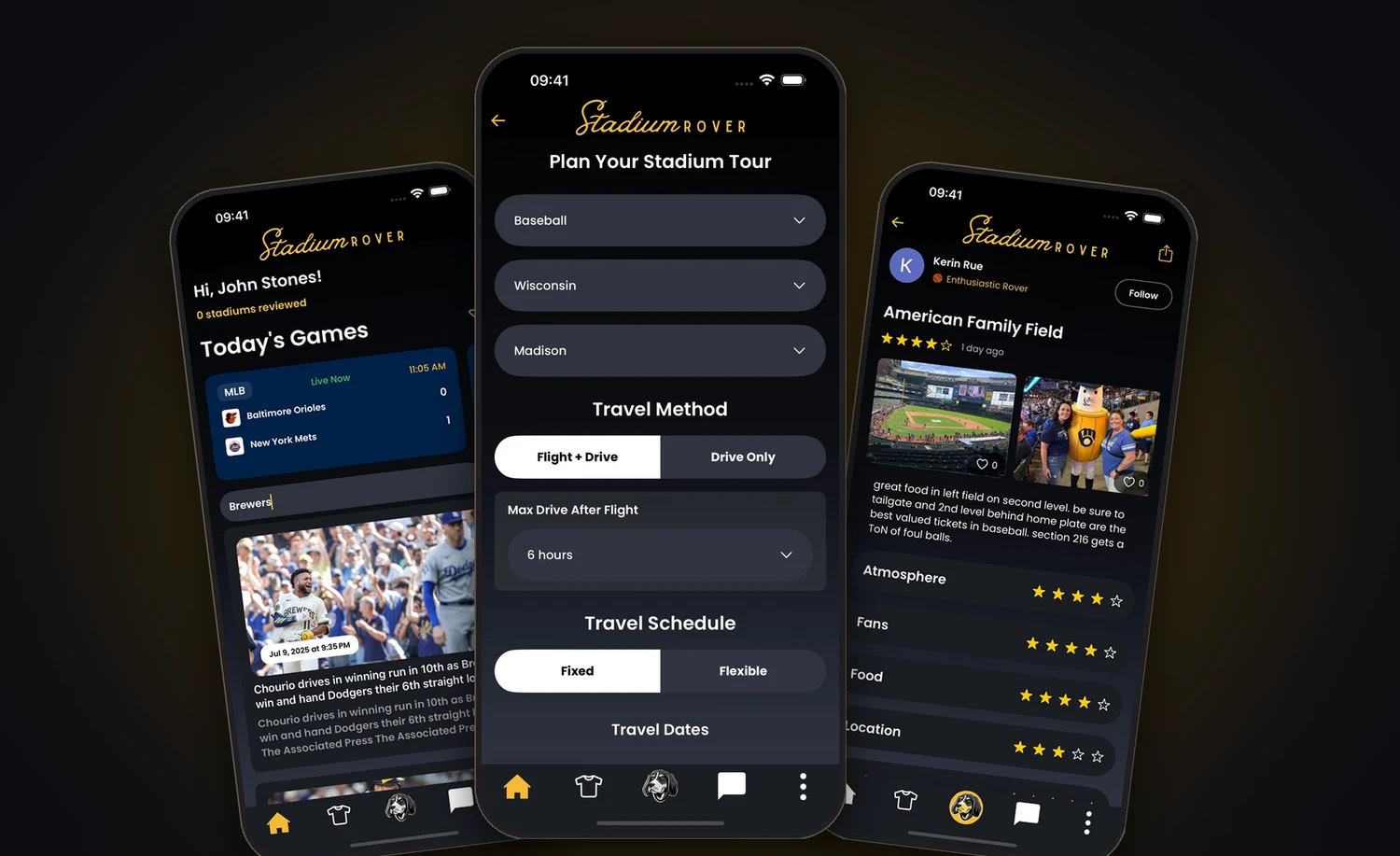
Stadium Rover is a fan-engagement application for sports news, ticket discovery, live discussions, stadium experiences, and AI-assisted multi-game trip planning, backed by separate core and AI services.
02
Achievements
- 01
Distributed backend
Architected a distributed backend that separated the mobile application's core API from a dedicated AI service, enabling independent development and operation of application and AI workloads.
- 02
AI itinerary service
Built an AI-powered multi-game itinerary service with FastAPI and LangChain, generating personalized travel plans from team preferences, travel dates, and event data.
- 03
AI output evaluation
Designed an AI evaluation agent using the ReAct framework to assess itinerary and stadium-review-summary outputs against predefined inputs and evaluation criteria.
- 04
Review-summary pipeline
Orchestrated an AI stadium-review-summary pipeline with GCP Workflows and implemented scheduled sports-data ingestion to keep downstream functionality current.
03
Architecture
Interactive: pick an option and tap a step to explore
AI Trip planning and AI quality gate
A fan requests a multi-game trip over a WebSocket. The Core API checks the request with a guardrail, such as valid dates and times, before anything is generated. Then the separate AI service builds the itinerary. If it takes a while, the user keeps using the app, and a notification says the itinerary is ready.
04
Timeline
- 1 year
- On this project
- 2024 – 2025
- Active
- Augment
- Where
05
The stack
 Node.js
 Express
 FastAPI
 LangChain
 GCP Workflows
- GCP
- GCS
- Secret Manager
 Supertest
 Redis
Redis Docker
 GitHub Actions
- GitHub Workflows
06
Links